

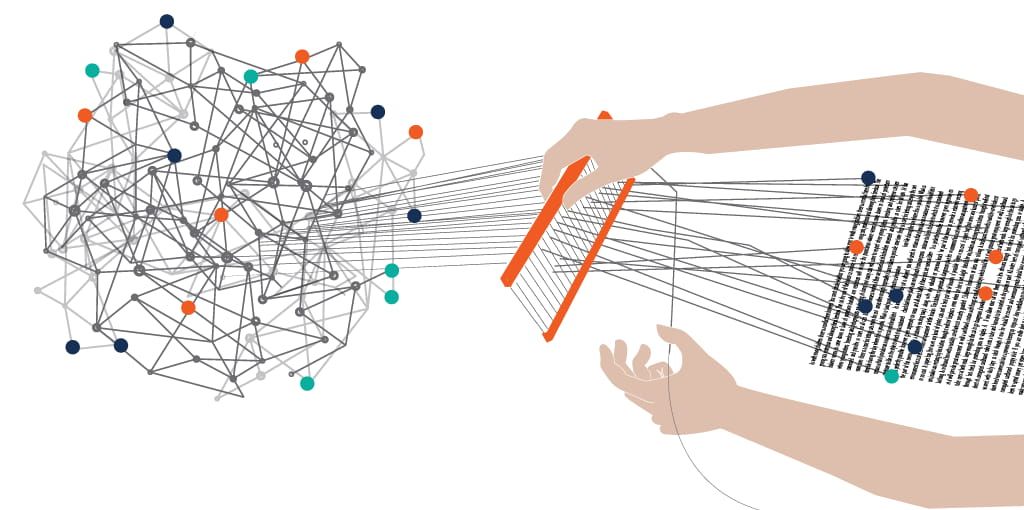
Language is one of humanity’s most powerful tools — and now, machines are beginning to understand it too. Natural Language Processing (NLP), a key field of Artificial Intelligence, enables computers to interpret, analyze, and generate human language in meaningful ways.
From chatbots that understand customer queries to systems that summarize large reports, NLP is transforming how organizations process and understand text data. Let’s explore how this technology is revolutionizing text analysis and shaping the future of communication.
1. What is Natural Language Processing?
Natural Language Processing bridges the gap between human communication and computer understanding.
It allows machines to read, interpret, and respond to human language — both written and spoken — just like we do in everyday conversation.
NLP uses a combination of linguistics, computer science, and machine learning to identify patterns and extract meaning from large volumes of unstructured text. This enables AI systems to understand sentiment, context, and intent behind words rather than just reading them literally.
2. How NLP Powers Text Analysis
Text analysis involves processing and understanding unstructured language data — from emails and social media posts to research documents and feedback forms. NLP plays a crucial role in this process by breaking down text into components like words, phrases, and meanings.
Some common NLP techniques include:
- Tokenization: Splitting text into individual words or phrases.
- Part-of-Speech Tagging: Identifying nouns, verbs, adjectives, etc.
- Named Entity Recognition (NER): Detecting people, organizations, and places.
- Sentiment Analysis: Determining the tone or emotion behind text.
- Topic Modeling: Discovering recurring themes in large datasets.
These methods turn messy, human language into structured data that can be analyzed, visualized, and acted upon.
3. Real-World Applications of NLP
NLP is widely used across industries to enhance productivity, decision-making, and customer engagement. Some impactful applications include:
- Customer Support Automation: AI-powered chatbots handle common inquiries efficiently.
- Market Research and Brand Monitoring: Businesses analyze public sentiment on social media.
- Healthcare Documentation: NLP extracts key details from patient notes and reports.
- Legal and Financial Analysis: Systems scan contracts or filings for compliance and risk insights.
- Content Moderation: AI identifies harmful or inappropriate language in online platforms.
At Lives Digital, we integrate NLP into intelligent business systems — helping organizations extract value from unstructured text and transform information into strategic insights.
4. The Role of Transformer Models
Recent advances in NLP have been driven by Transformer architectures like BERT, GPT, and RoBERTa.
Unlike older models, transformers understand the context and relationships between words in a sentence — both before and after each word — allowing for more accurate comprehension.
This innovation has revolutionized natural language understanding, enabling models to perform tasks like translation, summarization, and sentiment detection with human-like accuracy.
5. Benefits of NLP for Businesses
By integrating NLP into operations, organizations gain several measurable advantages:
- Improved Decision-Making: Text insights drive data-backed business strategies.
- Efficiency Gains: Automating text processing saves time and reduces manual effort.
- Enhanced Customer Experience: AI-driven communication improves response speed and personalization.
- Risk Management: Automated systems identify compliance risks or customer dissatisfaction early.
The result is smarter, faster, and more responsive organizations that can adapt to their customers and markets in real time.
Natural Language Processing gives computers the ability to read between the lines — understanding not just words, but the intent and emotion behind them.
— Lives Digital Team
6. The Future of NLP and Text Analysis
The next generation of NLP will go beyond understanding words — it will comprehend context, emotion, and culture. Advances in multilingual AI, emotion detection, and zero-shot learning are making NLP systems more adaptive, inclusive, and human-like.
At Lives Digital, we continue to explore and develop advanced NLP solutions that empower businesses to communicate intelligently, automate processes, and make sense of the language that drives their data.